
Dental Implants in Bedford: How They Compare With Dentures for Missing Teeth
August 15, 2026 2:43 amMissing teeth affect more than appearance. They can change how you eat, speak, and how comfortable you feel during ordinary parts of the day. Fortunately, modern dentistry offers more than one way to replace what is missing, and two of the most common choices are dentures and dental implants.
At Family Dentistry of Bedford in Bedford, TX, Dr. Jeff Davis can help you compare both options based on your mouth, your goals, and how you want the replacement to function day to day. Dentures rest on the gums and are removable, while dental implants are anchored in the jawbone and stay in place. Both can restore missing teeth, but they do it in very different ways.
If you are trying to decide between them, it helps to look beyond the basic pros and cons. Think about how many teeth are missing, whether you want something fixed or removable, how much maintenance you are comfortable with, and how important stability is during meals. Those details can point you toward a very different choice than someone else with the same number of missing teeth.
What Are Dentures?
Dentures have been around for a long time, but the versions used today look far more natural than the bulky appliances many people still picture. A partial denture can replace several missing teeth while fitting around the teeth that remain, while a full denture replaces an entire upper or lower arch. Because dentures rest on the gums, they do not require an implant for every missing tooth.
One of the main advantages is cost. Dentures are generally more affordable up front than implants, and they can usually be made more quickly. They also avoid implant surgery, which may be appealing if you want a simpler treatment path.
On the other hand, because dentures are not anchored in the jawbone, they can feel less secure when you eat or speak. A denture may start out fitting well and then loosen as the gums and jaw change shape over time. If you find yourself pressing it back into place with your tongue or reaching for more adhesive before meals, the fit may need attention.
What Are Dental Implants?
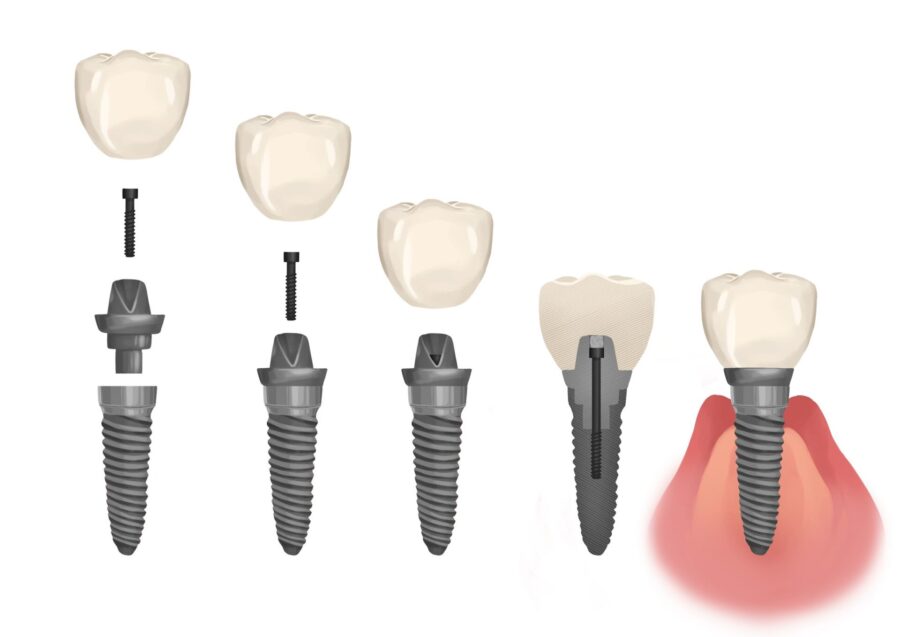
Dental implants are designed to act more like natural tooth roots. A small implant is placed into the jawbone, and once it heals, it can support a crown, bridge, or denture. Unlike a traditional denture, the implant itself does not come out.
Because implants are anchored in the bone, they offer more stability during chewing. You do not need adhesive, and you are less likely to think about whether the replacement is shifting halfway through a meal. For one missing tooth, an implant can also replace the tooth without using the neighbouring teeth for support.
However, implant treatment takes more time. The bone needs time to heal around the implant before the final restoration is finished, and some patients may need bone grafting first. Dr. Davis can evaluate the area and explain whether the site is ready for implant placement or whether another step would be needed.
Dentures and Implants Feel Different During Meals
Eating is often where the differences become easiest to notice. A well-fitting denture can restore a lot of function, but because it rests on the gums, there can still be some movement. Firmer foods may also take more patience, especially if the denture has started to loosen.
If you have started scanning a menu for foods that will give your denture the least trouble, you already know how much a loose fit can shape a meal. You may cut food smaller, chew more slowly, or automatically send everything to one side. Those habits can creep in quietly until they become part of the routine.
Implants have a firmer base because they are anchored in the jawbone. Once healing is complete, you are less likely to spend the meal wondering whether the replacement is moving. That can make chewing feel more natural and less like something you have to manage.
Cost, Comfort, and Long-Term Care
Dentures usually cost less up front than implants, which is one reason they remain a common choice. For someone replacing many teeth at once, that lower initial cost can make treatment easier to fit into the budget. They also avoid the added cost of implant surgery and possible grafting.
Implants generally require a larger investment at the beginning. However, they can last many years with good care, while dentures may need adjustments, relines, or replacement as the mouth changes. So it helps to look at both the initial cost and what maintenance may be needed later.
Comfort is another part of the comparison. Dentures can cause sore spots or feel less stable if the fit changes, while implants stay anchored in place once healing is complete. The cleaning is different too, since dentures come out for care while implant restorations stay in the mouth.
Implants Can Also Help Stabilize Dentures
Choosing implants does not always mean replacing every missing tooth with a separate implant crown. In some cases, a few implants can be used underneath a denture to give it more support. Depending on the design, the denture may still be removable, but it connects to implants instead of relying only on the gums.
That can be especially helpful with lower dentures, which have less surface area to rest on and can shift more easily. If you have spent years giving a lower denture a quick nudge back into place with your tongue, added support underneath can reduce how often that happens. Before implants are added, Dr. Davis can first check whether the denture simply needs an adjustment, reline, or replacement.
Upper dentures can benefit in another way. Traditional upper dentures often cover much of the palate to help create support and suction. With enough implant support, some designs can leave more of the roof of the mouth uncovered, which can make the denture feel less bulky and leave more of your palate exposed while you eat, speak, and taste food.
Cleaning and Maintenance Are Different
Dentures need to be removed for cleaning, and the gums, tongue, and any remaining natural teeth need attention too. Depending on the appliance, you may also need a denture brush or specific cleaning products. Because dentures are usually removed while you sleep, they become part of both the morning and nighttime routine.
Implant restorations stay in the mouth. A single implant crown is brushed much like a natural tooth, although the gumline around it needs careful cleaning. If implants support a larger bridge or denture, Dr. Davis may recommend floss threaders, small brushes, or other tools for cleaning around the restoration.
Neither option is maintenance-free. Dentures need their fit checked as the mouth changes, while implants need healthy gums and bone around them. Regular dental visits help Dr. Davis keep an eye on both the replacement and the tissues supporting it.
Treatment Time Is Different Too
Dentures can usually be made more quickly than implants, although extractions and gum healing may still affect the schedule. If several teeth need to be removed first, the fit of the denture may change as the tissues heal. Adjustments are common during that period because the mouth is still changing.
Implants take longer because healing is part of the process. After placement, the bone needs time to become stable around the implant before the final restoration is completed. If bone grafting is needed first, that can add another stage.
So, if you have travel, a major event, or a busy stretch at work coming up, bring those dates up early. Dr. Davis can explain where extractions, implant placement, healing, temporary teeth, and the final restoration may fall. Knowing the sequence from the beginning can make scheduling much easier.
Lifestyle Can Help Shape the Choice
Some patients prefer dentures because they want to avoid surgery and replace several teeth with one appliance. Others prefer implants because they want something that stays in place and feels more stable during meals. There is also a middle ground, since implants can be used to support a removable denture.
Think about what you are comfortable dealing with every day. If taking a denture in and out does not bother you, that may work well. If you already know you would rather have something fixed, implants may deserve a closer look.
Your bone health, remaining teeth, bite, medical history, and treatment goals all affect what can be done. Two people can be missing the same teeth and still end up choosing different replacements. The better option is the one that fits both the mouth and the person using it.
Dental Implants and Dentures at Family Dentistry of Bedford
At Family Dentistry of Bedford, Dr. Jeff Davis helps patients compare dentures and dental implants based on what is actually happening in their mouths. He can look at the teeth you still have, the spaces you want to replace, the bone underneath, and the way your bite comes together. From there, he can explain whether dentures, dental implants, or an implant-supported option fits what you need.
Tell us what has been happening at home too. Maybe your denture starts shifting by dinner, you have been chewing on one side for months, or you are tired of planning around a gap every time you eat. Those details give Dr. Davis a much better sense of what you want your replacement teeth to change.
If you are ready to compare dentures and dental implants, schedule a visit with Family Dentistry of Bedford in Bedford, TX. We can take a closer look, answer your questions, and explain what each option would involve before you make a decision. We’d be happy to welcome you in and help you find a tooth replacement that fits your mouth and your everyday routine!
Image from Authority Dental under CC 2.0
Categorized in: Dental Implants, Dentures