
What Parents Should Know About Dental Sealants for Kids
June 23, 2026 9:00 amKids can brush twice a day and still miss parts of their back teeth. Molars sit farther back, their chewing surfaces have deep grooves, and some of those areas are simply harder to see and reach with a toothbrush.
That is where dental sealants can help. A sealant is a thin protective coating placed over the chewing surface of a back tooth. It covers narrow grooves where food and bacteria can settle, especially when a toothbrush is not reaching as well as it should.
At Family Dentistry of Bedford in Bedford, TX, Dr. Jeff Davis can check your child’s molars and talk with you about whether sealants would be helpful. They are often placed after permanent molars come in, although the timing depends on the tooth, your child’s cavity history, and how well those back teeth are staying clean.
What Dental Sealants Actually Do
Sealants are not fillings. They are not used because a tooth already has a cavity. Instead, they are placed on healthy teeth to help lower the chance of decay getting started in the first place.
The chewing surfaces of molars have natural pits and grooves. Some are fairly shallow, so brushing reaches them without much trouble. Others are narrow and deep, which gives plaque and food more places to settle after meals and snacks.
A sealant fills in those grooves with a thin layer of material. Once it is in place, the tooth has a smoother surface, so there are fewer tiny spaces for bacteria to collect.
Sealants do not replace brushing, flossing, fluoride, or regular checkups. However, they can give molars extra protection during the years when children are still learning how to clean every part of their mouth well.
Why Back Teeth Need Extra Attention
Most parents can easily see the front teeth when their child smiles. The back teeth are different. They sit farther in the mouth, and children often focus first on the areas they can see clearly in the mirror.
The lower molars may be easier to spot when a child opens wide. However, upper molars can sit farther back and be harder to reach, especially during a quick morning routine or at the end of a long day.
Then there are the grooves on those teeth. Crackers, cereal, chips, dried fruit, sticky snacks, and other everyday foods can settle into the chewing surfaces. If the toothbrush misses part of those grooves, plaque can stay there longer than anyone realizes.
Sealants can add protection to those areas while children are still getting better at reaching every molar. They do not take the place of brushing, but they can help protect a spot that is easy to miss even when the daily routine is going reasonably well.
When Kids Usually Get Sealants
Sealants are often placed on permanent molars soon after they come in. The first permanent molars usually appear around age six, while the second permanent molars often arrive around age twelve.
These teeth do a lot of chewing, and they need to last for many years. Since they also tend to have deep grooves, dentists often prefer to protect them early rather than waiting to see whether decay develops.
In some cases, sealants may also be placed on baby teeth. That may be considered when a child has especially deep grooves, has had cavities before, or has a harder time keeping certain teeth clean. However, permanent molars are the most common teeth to seal.
The tooth needs to be far enough in for Dr. Davis to clean and seal it properly. So, during regular checkups, he can watch how new molars are coming in and let you know when the timing looks right.
The Sealant Appointment Is Usually Quick
The sealant process is usually simpler than parents expect. In most cases, there are no shots, drilling, or numbing involved.
First, the tooth is cleaned and dried. Then Dr. Davis places a special solution on the chewing surface for a short time so the sealant can bond to the tooth. After that, the tooth is rinsed, dried again, and the sealant is brushed into the grooves.
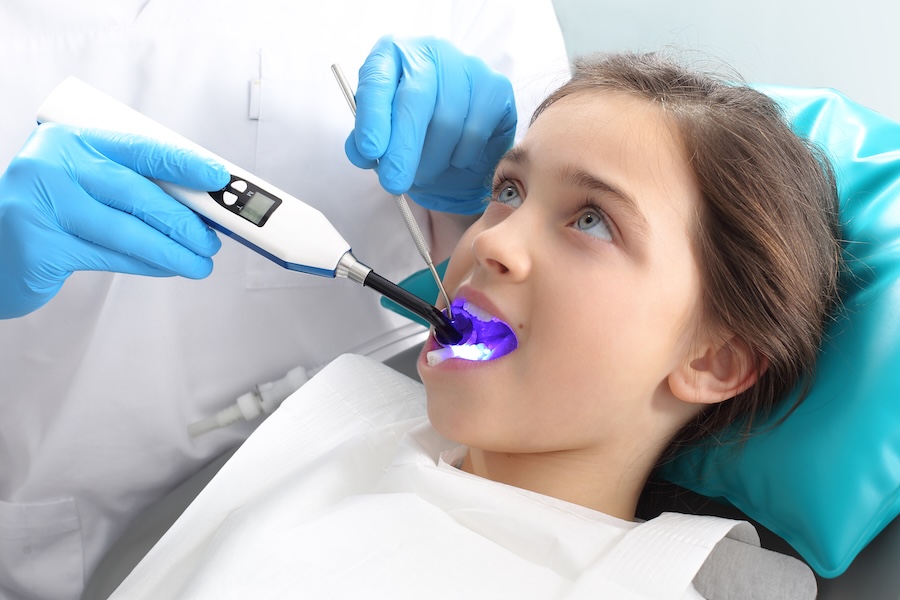
A curing light is often used to harden the material. Your child may notice the bright light, but the appointment is usually brief. Once the sealant is in place, Dr. Davis checks the bite to make sure the tooth feels normal.
Some children notice that the tooth feels smoother afterward. Others do not notice much at all. Either way, they can usually eat and drink normally once the appointment is over.
For a child who feels nervous about dental visits, sealants can also be a fairly simple introduction to dental treatment. There is no drilling sound, no numbing, and no recovery period afterward.
Sealants Are Often Covered by Dental Insurance
Dental sealants are often covered by insurance for children, especially when they are placed on permanent molars. Coverage can vary by plan, age, and the number of teeth being sealed, so it is still helpful to check ahead of time.
For many families, that makes sealants easier to include in routine dental care. They are often done during a regular checkup, and because the appointment is simple, there is usually not much extra planning involved.
The team at Family Dentistry of Bedford can review your child’s benefits and give you an estimate of what the plan may cover. Insurance companies make the final decision once a claim is processed, but having an estimate ahead of time can make the decision easier.
If your child recently changed insurance, moved onto a new employer plan, or started coverage through a different parent, bring the updated information with you. Even a small change in coverage can affect what is included.
Sealants Still Need Brushing and Flossing Behind Them
A sealant is usually placed on the chewing surface of a molar, where deep grooves are most likely to hold food and plaque. In some cases, a dentist may seal a deep groove on the side of a tooth as well. However, the top chewing surface is the usual place.
So, brushing and flossing still have their own jobs. Brushing cleans the rest of the tooth surfaces, while floss helps clean between teeth once they touch closely together.
When new molars come in, it can help for parents to check brushing for a while. Those teeth sit farther back, and they may feel awkward for kids to reach at first. A child can be doing a solid job overall and still miss upper molars or areas near the gums.
Sealants add another layer of protection, while fluoride toothpaste, regular brushing, flossing, water between snacks, and checkups all support the rest of the mouth.
How Long Dental Sealants Last
Sealants are made to hold up, but they are not permanent. Over time, they can wear down, chip, or come off in small areas.
That is why Dr. Davis checks them during regular exams. If part of a sealant has worn away, it can often be touched up or replaced without much trouble.
Some sealants last for several years. Others may need attention sooner, especially if a child grinds their teeth, chews on hard objects, or has a bite that puts extra pressure on certain molars.
Checking sealants is usually simple. It is part of the regular exam, along with looking for cavities, checking gum health, and watching how the teeth are growing in.
Sealants Can Help Kids Who Get Cavities Easily
Some kids seem to get cavities more easily than others. That can happen even when parents are keeping up with brushing, dental visits, and snacks.
Deep grooves can be part of the reason. Frequent snacking, dry mouth, difficulty reaching the back teeth, and a past history of cavities can also play a role. Sometimes certain molars are simply harder to keep clean than the rest.
A child may be a good candidate for sealants if they have had cavities before, have deep grooves, or are still learning how to brush every surface well. However, sealants are not only for children who have already had dental problems.
They can also be useful for healthy new molars. In that case, the goal is to protect the tooth while it is still in good shape rather than waiting for a cavity to form.
Dr. Davis can look at the shape of the teeth, your child’s dental history, and the areas that seem harder to clean. Some children may benefit from sealants on several molars. Others may not need them at all.
Dental Sealants and Fluoride Do Different Jobs
Parents sometimes hear about fluoride and sealants during the same visit and wonder whether one replaces the other. They do different things, so they can work well together.
Fluoride helps strengthen enamel across the tooth surface. It can make teeth more resistant to decay and may help early weak spots recover before they become larger cavities.
Sealants focus on the grooves in the back teeth. They cover the narrow areas where food and bacteria tend to settle during chewing.
So, fluoride supports the tooth overall, while sealants help protect chewing grooves that can be difficult to clean. Both can be useful as permanent teeth start coming in and children gain more independence with brushing.
What Parents Can Do at Home After Sealants Are Placed
Most kids can eat and drink normally after sealants. There is usually no recovery time, and you do not need to rearrange the day around the appointment.
The usual brushing routine should continue, especially before bed. It also helps to remind kids that teeth are not tools. Chewing ice, biting hard plastic, opening packages with teeth, and crunching on pens can damage natural teeth as well as dental work.
At the next checkup, Dr. Davis can take another look at the sealants and make sure they are still covering the grooves well. If your child says a tooth suddenly feels rough, sharp, or different after having sealants for a while, mention it at the next visit. It may be something small, but it is worth checking if a sealant has chipped or worn down.
Dental Sealants for Kids in Bedford, TX
Dental sealants are a simple way to give kids’ back teeth more protection during the years when cavities can show up in deep molar grooves. They do not replace brushing, flossing, fluoride, or regular checkups. However, they can help protect the chewing surfaces that are easiest to miss, especially upper molars that tend to sit farther back.
At Family Dentistry of Bedford in Bedford, TX, Dr. Jeff Davis can check your child’s molars and talk with you about whether sealants would be useful. Call to schedule a pediatric visit if your child has new permanent molars, has had cavities before, or is still working on reaching the back teeth thoroughly.
Categorized in: Dental Sealants, Pediatric Dentistry